Regulatory Fees
Daily charges for non-compliant vehicles now exceed £12.50, creating a significant annual overhead for commuters.
Financial Risks →An analytical breakdown of the financial variables affecting vehicle ownership in the capital, from ULEZ expansion to congestion tariffs and public transport alternatives.
New guides and news straight to your email.
Daily charges for non-compliant vehicles now exceed £12.50, creating a significant annual overhead for commuters.
Financial Risks →Borough-specific permit pricing is increasingly tied to CO2 emissions, penalizing older diesel and petrol models.
Market Trends →Public transport remains the primary cost-saving alternative, despite recent cap increases on Oyster and contactless fares.
Energy Metrics →The expansion of the Ultra Low Emission Zone (ULEZ) to all London boroughs has fundamentally altered the economics of car ownership. For owners of non-compliant vehicles, the daily charge of £12.50 translates to an annual expenditure of approximately £3,250 for daily commuters. This fiscal pressure has accelerated the depreciation of older internal combustion engine (ICE) vehicles within the M25 boundary.
Data from recent market audits suggest that the secondary market value for non-compliant diesel cars has dropped by 15-20% faster than compliant alternatives. Investors and private owners must now calculate the "compliance gap"—the difference between the cost of paying the daily fine versus the capital expenditure required to upgrade to a Euro 6 diesel or Euro 4 petrol engine.
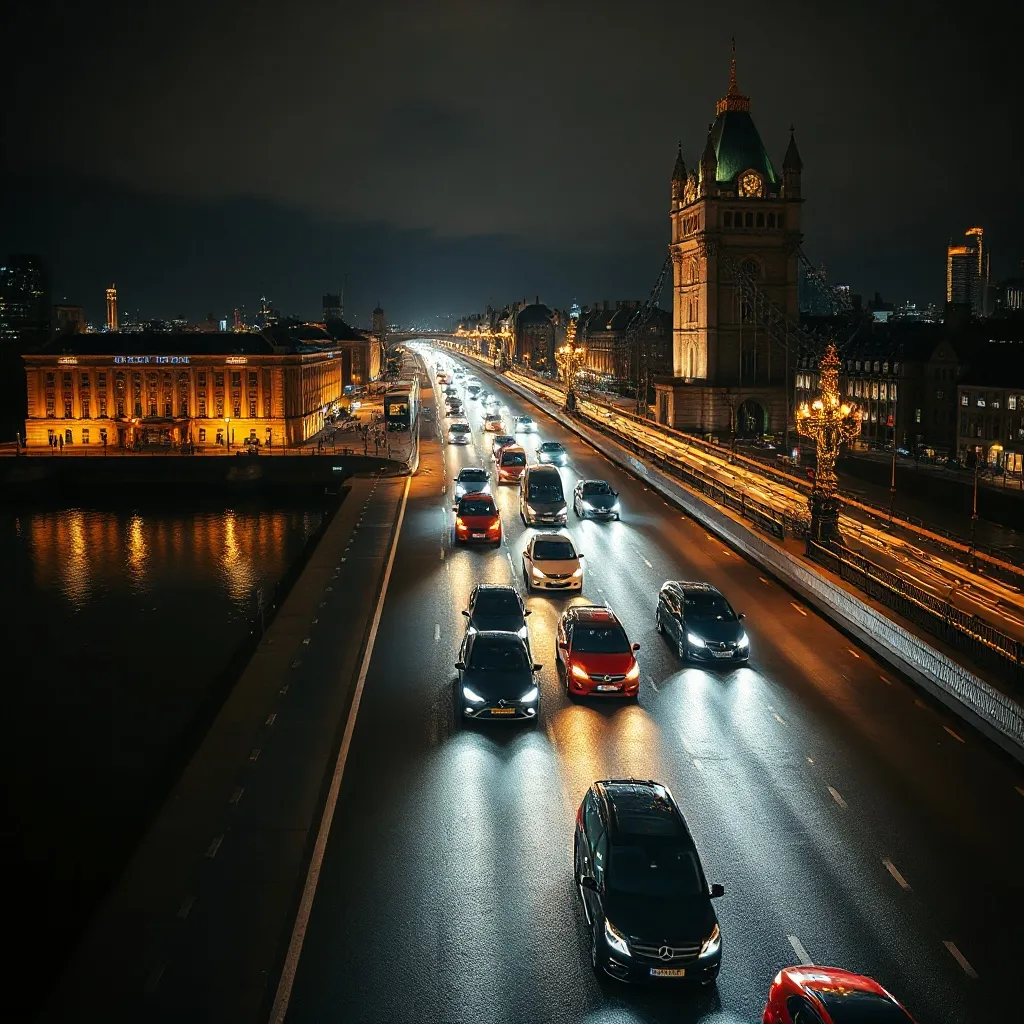
Residential parking permits in London are no longer a flat-rate utility. Most boroughs, including Islington, Camden, and Westminster, have implemented tiered pricing structures based on CO2 emissions. For high-emission vehicles, a standard resident permit can now exceed £500 annually, while electric vehicles (EVs) often enjoy rates as low as £50.
Many boroughs apply an additional £100-£150 surcharge on all diesel vehicles regardless of their Euro emission standard, citing nitrogen dioxide concerns.
While permit costs are lower, the infrastructure for on-street charging remains a bottleneck, with varying kilowatt-hour costs across different providers.
Source: London Councils Parking Revenue Data 2023/24
The Congestion Charge remains one of the most aggressive urban traffic management tools globally. At £15 per day, it targets the most densely populated commercial zones. The removal of the "Cleaner Vehicle Discount" for plug-in hybrids has left only pure battery electric vehicles (BEVs) and hydrogen fuel cell vehicles exempt—a status that is also scheduled for transition in 2025.
For more on managing commercial vehicle costs, view our Fleet Management Analysis.
Evaluating the elasticity of transport demand requires a direct comparison between private vehicle TCO and public transport caps.
| Zone Range | Daily Cap (Contactless) | Monthly Travelcard |
|---|---|---|
| Zones 1–2 | £8.50 | £162.10 |
| Zones 1–4 | £12.30 | £235.80 |
| Zones 1–6 | £15.60 | £297.80 |
Note: Figures represent standard adult fares as of March 2024. For a full breakdown of vehicle financing vs. commuting costs, see our Leasing vs. Buying guide.
For self-employed individuals and businesses, ULEZ charges incurred during business travel (excluding regular commuting) are generally considered a deductible expense for Income Tax and Corporation Tax purposes.
Compliance is verified via the TfL online portal using the vehicle's VRM (Vehicle Registration Mark). It is based on the NOx and Particulate Matter limits defined in the Euro standards listed on the V5C logbook.
The 90% residents' discount for the Congestion Charge is currently closed to new applicants. Existing holders retain the discount as long as they remain eligible and reside within the zone.
Greystone Home provides detailed financial modeling for urban mobility and vehicle acquisition. Reduce your annual overhead by analyzing the true cost of London transport.